Bangladesh's Investment Reality:
For years, Bangladesh has tried to attract FDI with incentives and promotion-but investors today are looking for something more fundamental: a system they can trust. This truth is uncomfortable but real. Recent conversations around FDI point to a subtle but important shift. While overall FDI has not collapsed, much of it now comes from reinvested earnings rather than fresh equity. In other words, existing investors are staying, but new ones are more cautious. From a business perspective, investors are not just comparing costs; they are assessing whether the system works consistently. Policy clarity is one concern. Investors want to understand not only today's incentives butalso the stability of rules over time. Uncertainty in direction increases perceived risk
Execution capacity is another concern. Reforms like the One Stop Service under the Bangladesh Investment Development Authority are steps forward, but many processes still involve manual steps or multiple agencies. For new entrants, this raises the cost of navigating the system, and Bangladeshi entrepreneurs providing "Bangladesh entry strategy to potential investors are feeling the brunt of the process as they have to 'manage' the compliance requirements of multiple organizations. Closer to my profession, if we look at the enlisted Auditors list, there is a list in every major regulator, ranging from Bangladesh Bank to DRA, where, in an ideal world, FRC enlistment should suffice.The world as we know it is changing its trajectory every minute. The ongoing Middle East crisis is pushing up energy costs and could affect remittance flows -both critical for Bangladesh. As external pressures rise.
investors are likely to become more selective. They will choose countries where they know they will have operational efficiency and confidence in the system, where everyone plays by the same rules.
Overcoming the governance challenges from the lens of Professional Accountancy:
We asked participants at a roundtable hosted by the World Bank Bangladesh, titled "Professional Accountancy Organizations (PAOs) as Centers of Excellence in Strengthening Governance in Bangladesh," to name one governance challenge they wish could be solved overnight. The finding? The most pressing idea is the consistent and strict enforcement of existing laws and standards. The success of any regulatory framework relies on compliance. Without reliable enforcement, incremental changes to regulations won't have much effect. This needs to be supported by strong, independent boards and audit committees that can provide meaningful oversight and contest unethical behavior. Protecting COs and financial preparers from undue pressure through formal protections and professional standards, along with strengthening external audit capacity forhighquality, independent assurance, has been identified as a key development idea.Governance practices should shift from just following procedures to a substantive, riskbased approach. Above all, accountability must start at the top, with leaders setting a clear tone of integrity and ethical behavior that spreads throughout the organization.
Professional Accountancy: An Underleveraged Enabler
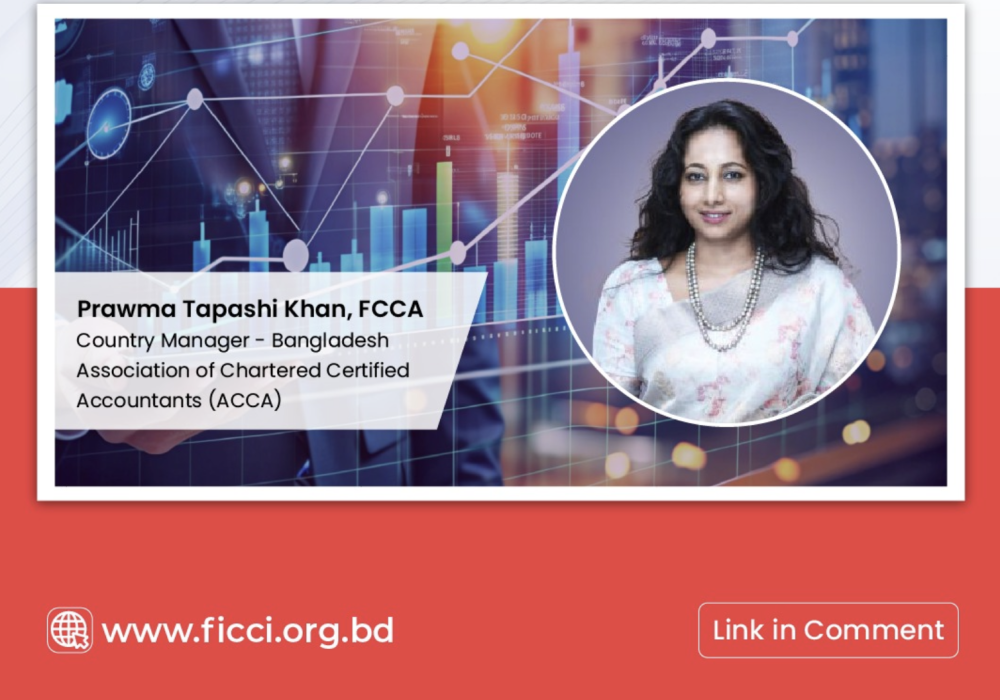
AJBA dynamic panel study finds that IRS adoption is associated with higher FDI inflows in developing countries, and that institutional quality strengthens the relationship. A 2022 MENA study reaches a related conclusion: inward FDI is linked to FRS adoption and institutional quality rather than standards in isolation. This means that accounting capacity is effective when it is integrated into stronger institutions. For Bangladesh, the policy implication is not merely to train more accountants to enhance FDI; the focus also needs to be on enhancing professional accountancy capacity in areas where investors interact with the system: audit quality, due diligence, tax certainty, insolvency and restructuring, sustainability reporting, digital finance controls, and independent assurance. Bangladesh's current FDI weakness is unlikely to be solved by accountancy reform alone, but stronger PAOs should be viewed as part of the country's investment infrastructure. ACCA, the largest Global Professional Accountancy body with over 260,000 members and over 600,000 future members globally, and over 600 members locally, is well placed to support the institutional reforms Bangladesh is aiming for.Ultimately, investment is subjective, with existing investors' experiences influencing whether a new investor will enter the market. For Bangladesh, this signals toward shifting focus from promotion to performance. A truly functional single-window system, streamlined and time-bound approvals, and stronger institutional.