Bangladesh stands at a defining moment in its digital infrastructure journey. With 77 million internet users- representing 44.5% of the population-the country has achieved the critical scale required for meaningful digital economic activity. The question is no longer whether to invest in connectivity, but how quickly high-quality infrastructure can be deployed to translate access into measurable economic returns.
Connectivity as Modern Growth Capital
Digital infrastructure today functions as foundational economic capital, much like roads, ports, and power grids in earlier development phases. Two interdependent layers determine the strength of this foundation: Fiber Optic Networks, which carry vast volumes of data and Telecommunications Towers, which ensure wide-area wireless coverage. Together they define the geography, reliability and inclusivity of digital participation.
 Bangladesh has made substantial progress, with 99% of the population now living within 4G coverage. Yet 96.9 million people 55.5% of the population remain offline. This gap underscores a crucial distinction: coverage does not equal connectivity. Tower sites may deliver signal reach, but without strong fiber backhaul and adequate capacity, network quality suffers. With a median age of 26, Bangladesh risks underutilizing its largest asset-a young workforce capable of competing in global digital labor markets-unless digital integration accelerates.
The Economic Gain from Broadband Expansion
Across developing economies, the linkage between broadband penetration and GDP growth is well established. Bangladesh's digital economy, currently valued at USD 3.5 billion, remains far below its potential given the infrastructure footprint already in place.
Sectoral growth increasingly depends on coordinated tower densification and fiber extension.
• Fintech platforms rely on low-latency transactions enabled by fiber-backed networks.
• Logistics optimization requires seamless tower coverage for real-time data exchange.
• Manufacturing is shifting toward loT-enabled systems that demand stable, high-bandwidth connectivity.
• Healthcare telematics depends on reliable networks that can support diagnostics and remote consultations.
When towers are adequately densified and fiber backhaul is robust, each layer amplifies the other's value, creating a multiplier effect across the economy.
Inclusion, Adoption, and Economic Participation
Household internet penetration has climbed from 43.6% in 2023 to 54.8% by mid-2025-a 25.7% increase supported by the expanding tower footprint and fiber capacity that enables higher-bandwidth usage. Connected households consistently exhibit improved educational attainment, greater income diversification and stronger participation in financial services.
Digital platforms are reshaping economic inclusion.
• Women entrepreneurs are reaching customers through e-commerce without needing physical storefronts.
• Rural SMEs are selling nationwide through online marketplaces.
• Freelancers are entering global digital service markets.
Meanwhile, essential public services-from mobile banking to telemedicine, agricultural advisory systems and e-government-depend entirely on minimum performance thresholds dictated by the underlying network infrastructure. Without strong fiber and tower assets, these services cannot scale effectively.
Structural Barriers and Market Gaps
Despite infrastructure expansion, several barriers continue to constrain digital adoption. Device affordability, data taxation and pricing models create persistent entry barriers for lower-income households. Technical limitations also emerge as usage increases; only 18.3% of users currently access IPv6-capable connections, hinting at potential capacity bottlenecks.
 Rural deployment faces structural challenges: difficult terrain, unreliable power, security risks and lower revenue density raise costs for tower installation. Fiber roll-out beyond urban centers is slowed by right-of-way constraints and projected low utilization. These conditions risk creating a two-tier digital economy-one urban and connected, the other rural and left behind.
Infrastructure sharing models offer a practical solution. Allowing multiple operators to use common tower and fiber assets preserves competition at the service layer while achieving economies of scale at the infrastructure layer.
Strategic Priorities for Realizing the Connectivity Dividend
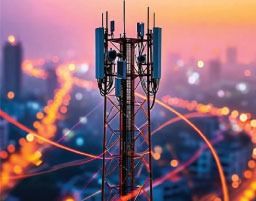
To unlock the full value of digital infrastructure, Bangladesh must invest in both coverage and quality. Extending the national fiber backbone is essential; mobile sites without fiber backhaul depend on lower-capacity technologies that degrade service quality. Prioritizing 4G densification in underserved regions and deploying fiber-to-the-tower solutions will significantly improve network reliability and capacity.
 Regulatory efficiency is equally critical. Faster permitting, streamlined right-of-way approvals and consistent policies around tower sharing can lower deployment costs and accelerate expansion. Extending open-access principles to fiber networks could replicate the success seen in tower sharing, enabling more operators to deliver competitive services.
Long-term infrastructure investments require regulatory predictability. With assets that operate over 15-20-year horizons, stable policy frameworks are necessary to secure the capital required. At the same time, adoption relies on investments in digital literacy, SME digital transformation and robust data protection frameworks to build user trust and drive usage.

From Infrastructure Build-Out to Economic Transformation
Digital transformation will be measured not only by connectivity statistics, but by economic outcomes: productivity gains in digitalized sectors, new employment in digital industries, reduced urban-rural income gaps and expanded SME market reach. Infrastructure metrics-fiber kilometers deployed, tower density, backhaul capacity and availability in underserved regions-remain equally predictive of economic performance.
Bangladesh's competitive position in the global digital economy will depend on infrastructure quality, regulatory stability, and accelerated adoption. With coordinated public-private investment, targeted rural deployment and strategic human-capital development, the country can unlock a sustained cycle of digital-driven growth.
Closing Statement
Bangladesh has built the foundation for digital prosperity, but foundations alone do not create progress. The connectivity dividend becomes real only when infrastructure, policy, and inclusion move in unison. The opportunity is at our doorstep-and the speed and coordination of our actions today will determine the digital strength, economic resilience, and global competitiveness of tomorrow.
References for the Statistics Used
77.7 million internet users (44.5% penetration) Source: DataReportal - Digital 2025: Bangladesh https://datareportal.com/reports/digital-2025-bangladesh
96.9 million people offline (55.5% of population) Source: DataReportal - Digital 2025: Bangladesh (Derived directly from the penetration figures) https://datareportal.com/reports/digital-2025-bangladesh
Median age of 26
Source: DataReportal - Digital 2025: Bangladesh
https://datareportal.com/reports/digital-2025-bangladesh
Digital economy valued at USD 3.5 billion
Source: Bangladesh Investment Development Authority (BIDA) - Digital Economy Overview https://summit.bida.gov.bd/digital-economy
99% of population covered by 4G-capable network
Source: GSMA - Impact of Spectrum Pricing in Bangladesh
https://www.gsma.com/connectivity-for-good/spectrum/gsma_resources/impact-of-spectrum-pricing-in-bangladesh/
Household internet access increased from 43.6% (2023) to 54.8% (mid-2025)
Source: Bangladesh Bureau of Statistics data (as quoted on Wikipedia) - Internet in Bangladesh https://en.wikipedia.org/wiki/Internet_in_Bangladesh