How Bangladesh is Transforming its Maritime Future
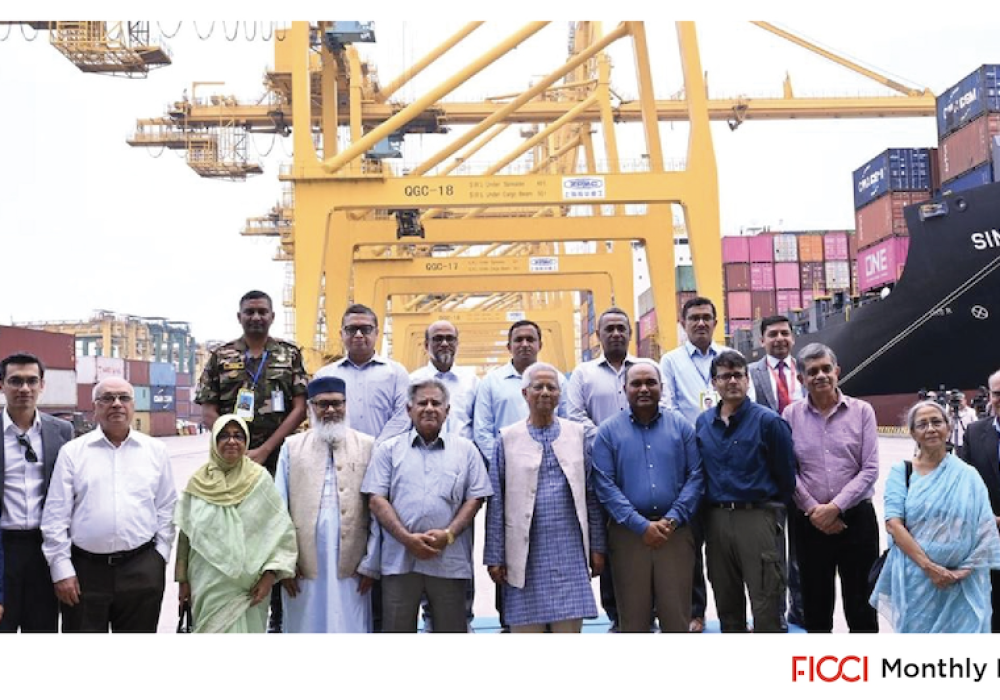
Bangladesh is entering a transformative era in maritime development. With over 90 percent of its trade moving through ports, the country is strategically modernizing port infrastructure, strengthening digital systems, and expanding international partnerships to position itself as a regional trade hub.
The January–February 2026 edition of the FICCI Special Bulletin highlights how modern and efficient ports are shaping Bangladesh’s competitiveness in global trade and investment.
Editorial Insight: Ports as Catalysts of Economic Growth

In the editorial section (page 4), FICCI emphasizes that strong port infrastructure is no longer optional — it is essential for global competitiveness. Efficient ports reduce costs, shorten turnaround times, and increase investor confidence.
Chittagong Port, handling the vast majority of Bangladesh’s maritime trade, plays a critical role in this transformation. Strategic reforms, infrastructure expansion, and digital modernization are accelerating its evolution into a modern trade gateway.
Message from the President: Strengthening Public-Private Collaboration

 In her message (page 5), the President of FICCI underscores the importance of public-private partnership (PPP) in strengthening port efficiency and supply chain resilience.
Bangladesh’s improved connectivity and investor-friendly environment are attracting both domestic and foreign investments. FICCI continues to engage policymakers and industry leaders to promote sustainable growth and economic diversification.
Policymakers’ Views: Building a Modern Port Ecosystem
National Ports Strategy and Infrastructure Expansion
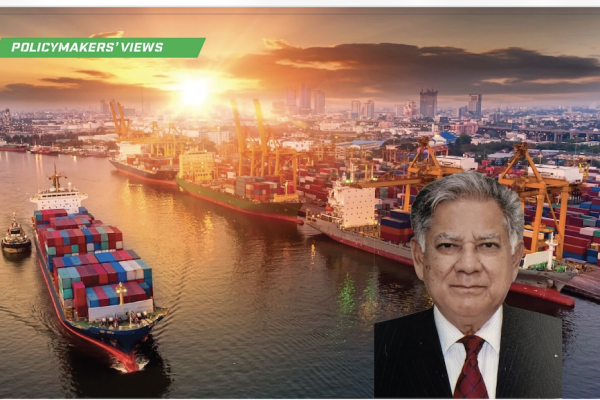
As highlighted in pages 7–8, Bangladesh has formulated its first National Ports Strategy to ensure coordinated development across seaports, inland ports, and river terminals.
Major initiatives include:
- Expansion of Chattogram Port capacity
- Inauguration of Laldia Container Terminal
- Development of Bay Terminal
- Modernization of Mongla Port
- Green shipping initiatives
These projects aim to reduce congestion, increase throughput capacity, and enhance Bangladesh’s ranking in global shipping indexes.
Modern Ports Are Systems, Not Just Infrastructure
On page 9–10, insights from the Executive Chairman of BIDA & BEZA emphasize that modern ports are integrated systems combining:
- Digital customs
- Real-time tracking
- Seamless documentation
- Smart cargo handling
- High crane productivity
Vietnam’s transformation is cited as a benchmark example — demonstrating that policy reform combined with operational efficiency can drastically improve global rankings.
Interview: Chairman of Chittagong Port Authority (CPA)

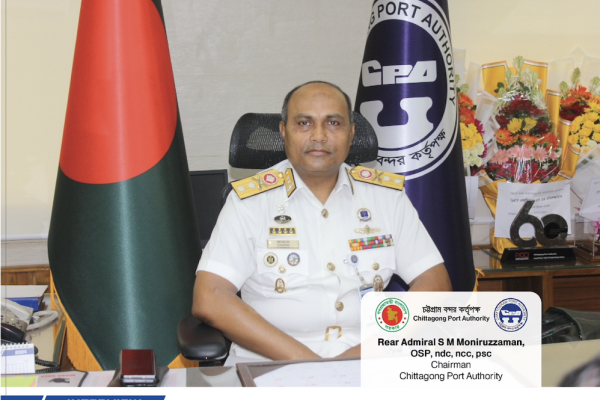
In the in-depth interview (pages 11–15), the CPA Chairman outlines major achievements:
1. Reduced Vessel Turnaround Time
Operational reforms have significantly lowered waiting periods and improved berth productivity.
2. Digital Transformation
- Full implementation of online billing
- Gate pass automation
- Reduced paperwork
- Faster cargo release
3. Bay Terminal Project
The upcoming Bay Terminal will:
- Handle larger vessels
- Operate 24/7
- Increase container capacity
- Improve draft capacity up to 12 meters
4. International Collaboration
Partnerships with global terminal operators and technology providers are strengthening operational standards and compliance with international best practices.
Thematic Article: Safeguarding Trade and Preventing Illicit Flows

The bulletin (pages 16–19) discusses the importance of port modernization in combating smuggling and illicit trade.
Key challenges include:
- Legacy infrastructure
- Manual inspection processes
- Weak monitoring systems
The solution lies in:
- Digital customs systems
- Risk-based inspection
- Integrated cargo tracking
- Advanced scanning technology
Modernized ports not only protect revenue but also ensure product safety, investor confidence, and economic stability.
Future-Ready Infrastructure: Laldia Container Terminal
The final article (page 20) focuses on the Laldia Container Terminal project, developed under a public-private partnership model with international expertise.
This terminal will:
- Expand container capacity
- Support Bangladesh’s export growth
- Enhance connectivity
- Strengthen regional competitiveness
With increasing manufacturing exports, especially in textiles and ready-made garments, such infrastructure is vital for sustaining economic momentum.
Why This Matters for Investors
Modern ports mean:
✔ Lower logistics costs
✔ Faster cargo clearance
✔ Higher reliability
✔ Improved trade security
✔ Increased foreign investment
Bangladesh’s maritime transformation is not just about infrastructure — it is about building a resilient, transparent, and competitive trade ecosystem.
Conclusion: A Maritime Nation on the Rise
Bangladesh is strategically aligning policy reform, infrastructure development, and digital innovation to transform its port sector.
With coordinated leadership from government agencies, active engagement from FICCI, and collaboration with global partners, the country is steadily positioning itself as a regional logistics hub.
The journey toward a modern, efficient port system is well underway — and it signals a promising future for trade, investment, and economic prosperity.