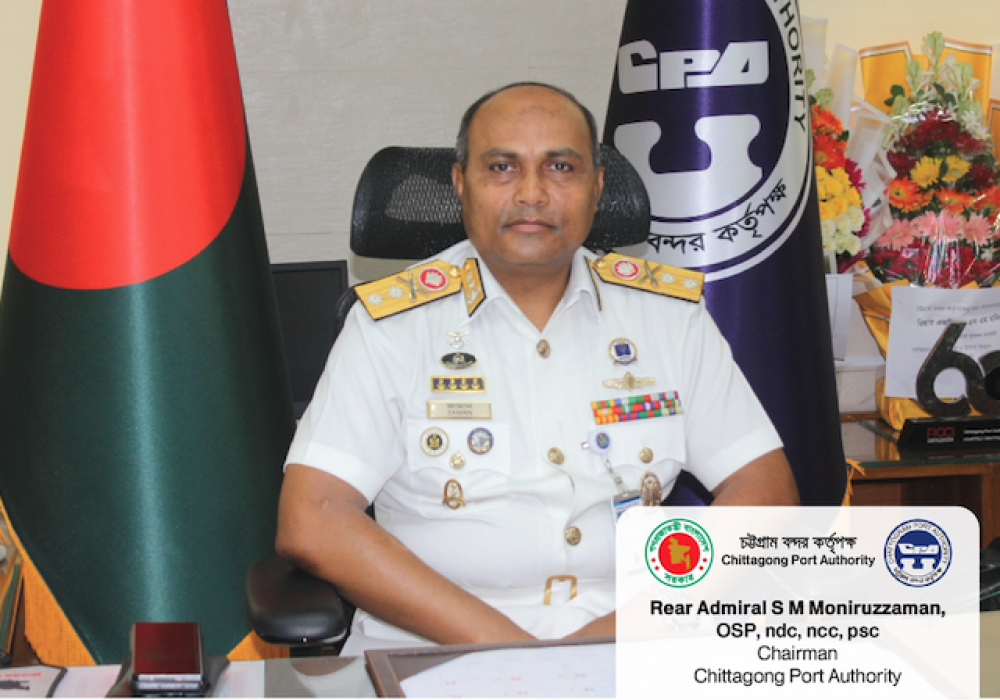
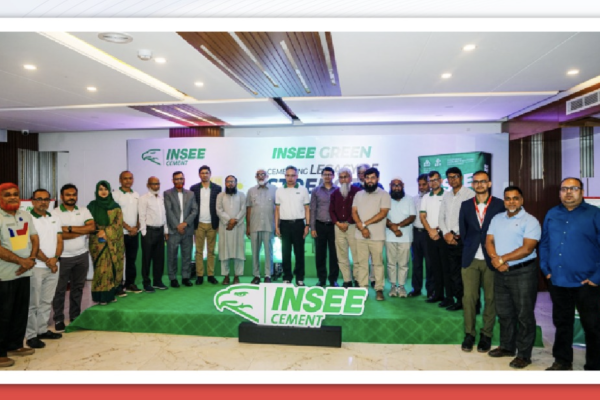
Chittagong Port is in the midst of a major transformation, reshaping how Bangladesh connects with global trade. In this interview, Rear Admiral S M Moniruzzaman, Chairman of the Chittagong Port Authority (CPA), speaks candidly about the operational reforms and disciplined management that have led to historic improvements in vessel turnaround time. He explains how digitalisation and the move toward paperless systems are making port processes faster, simpler, and more cost-effective for exporters and importers. The conversation also sheds light on the Bay Terminal project and the role of international partnerships in expanding capacity and strengthening competitiveness. Looking ahead, the Chairman shares CPA's vision for building a seamless, multimodal, and technology-driven logistics ecosystem for Bangladesh.
Q1. Chittagong Port has recorded noticeable improvements in vessel turnaround time and reduced waiting periods. What key operational reforms or process changes have driven this progress?
CPA Chairman: The reduction in vessel turnaround time reflects carefully planned operational improvements and targeted capacity expansion by the Chittagong Port Authority. In 2025, overall, operational discipline and efficient management were introduced across the port ecosystem. Primary focuses were on the capacity and efficiency enhancement with greater speed in delivery of services. In this regard, we introduced modern cargo handling equipment, increased yard space, and reinforced operational preparedness across all terminals. These initiatives allowed the port to manage growing vessel calls and cargo volumes with greater efficiency.
As a direct outcome, Chittagong Port recorded Zero Waiting Time for the first time in its history during the final quarter of 2025, as vessels were able to berth immediately on arrival.During this period, the average vessel turnaround time declined to 2.53 days. This milestone highlights the collective dedication of port officials, employees, and workers, who maintained uninterrupted operations despite logistical pressures and political challenges. Faster vessel handling has delivered tangible benefits to importers by speeding up cargo discharge and facilitating smoother and more reliable trade flows.
Q2: How is digitalisation being used to streamline processes and reduce logistics costs for exporters and importers?
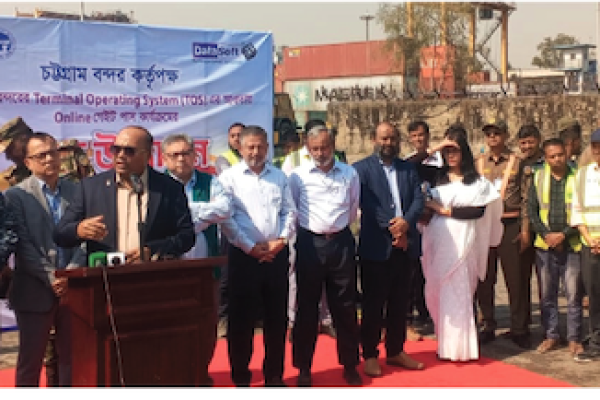
CPA Chairman: Digitalisation sits at the heart of the Chittagong Port Authority's modernisation efforts and its transition towards a paperless port. CPA aims to achieve its complete port single window digital platform. i.e. CPA Sky as the first ever port community system by February 2026. The introduction of the Terminal Operating System (TOS) has strengthened coordination across port operations, while the e-gate pass management system allows users to apply for gate passes and complete billing payments online at any time.
This shift has eased traffic congestion around the port and enhanced transparency by reducing reliance on manual procedures. The level of adoption is clear; with an average of 60,000 to 65,000 gate entries handled each month and a highest recorded daily issuance of 7,080 gate passes. By providing remote access to essential services and cutting physical delays, digitalisation has made cargo movement more efficient, reduced administrative pressure, and helped exporters and importers save both time and operating costs.
Source: The Daily Star
Q3: The Bay Terminal project is a major capacity expansion. What timelines and milestones
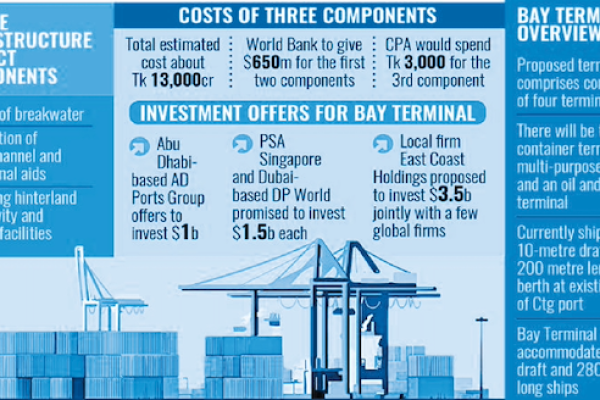
CPA Chairman: The Bay Terminal stands as a flagship infrastructure initiative that marks a Bangladesh's port capacity. It's a dream project that will be a game changer for Bangladesh's competitiveness in the global maritime trade. It has been planned as the country's first green port, ensuring that growth is aligned with long term sustainability objectives. To develop its marine infrastructure, a loan agreement of USD 650 million has been signed with the World Bank, and construction activities are expected to begin by mid 2026
Once operational by 2030 the Bay Terminal will substantially improve Chittagong Port's capacity to accommodate rising container volumes and larger, modern vessels for 24/7 operation as well as direct shipping. Bay Terminal will advance speed to market to and from Bangladesh reducing cost of freight and cargo dwell-time to achieve competitive advantages over our peer competitors like Vietnam, Thailand, India etc to attract highend products, FDI and open-up provisions for job creation in Bangladesh. Together with the Matarbari Deep Sea Port, it will reinforce Bangladesh's role as an important commercial gateway in South Asia. As a whole, the project is expected to facilitate trade volumes, draw the interest of international terminal operators, and enhance Bangladesh's competitiveness in regional and global maritime trade.

Q4: How are international port operators and global technology partners contributing to Chittagong Port's transformation into a competitive regional logistics hub?
CPA Chairman: International collaboration forms an important pillar of the Chittagong Port Authority's transformation agenda. In keeping with global best practices, the authority has expanded public private partnerships to improve operational efficiency and raise management standards. Long term agreements have been concluded with Denmark's APM Terminals for operating the Laldia Container Terminal and with Switzerland's Medlog for managing the Pangaon Terminal. These collaborations introduce international operational expertise, contemporary terminal management practices, and efficiency focused approaches into daily port operations. At the same time, the use of digital systems such as the TOS is supporting more transparent and data informed decision making. Combined, the contribution of international operators and modern technologies are helping Chittagong Port align with international standards and strengthen its position as a competitive regional logistics hub in the global maritime stage.
Q5: Looking ahead, what initiatives is CPA considering to better integrate inland transport networks and digital platforms to enable a seamless, end-to-end logistics ecosystem across Bangladesh?
CPA Chairman: As cargo volumes continue to rise, the CPA remains focused on reinforcing the wider logistics chain connected to the port. Ongoing digitalisation efforts (CPA Sky) are directed towards simplifying procedures, expanding paperless services, and improving transparency for all port users. At the same time, major infrastructure initiatives such as the Bay Terminal, the expansion of Laldia Terminal, and the Matarbari Deep Sea Port are intended to ensure smoother cargo movement beyond the port area. Currently, about 96% cargoes are transported to and from Dhaka/Chittagong by road. CPA has taken initiatives to diversity its logistic echosystem by a modal shift in hinterland transport corridore. A 70%, 20% and 10% respectively by road, rail and inland waterways are considered for multi-modal connectivity. In addition, through terminal modernisation, the adoption of digital platforms, and alignment of port development with national logistics requirements, the authority is working to enable faster cargo movement and foster a more efficient as well as a competitive trade ecosystem across Bangladesh and beyond.