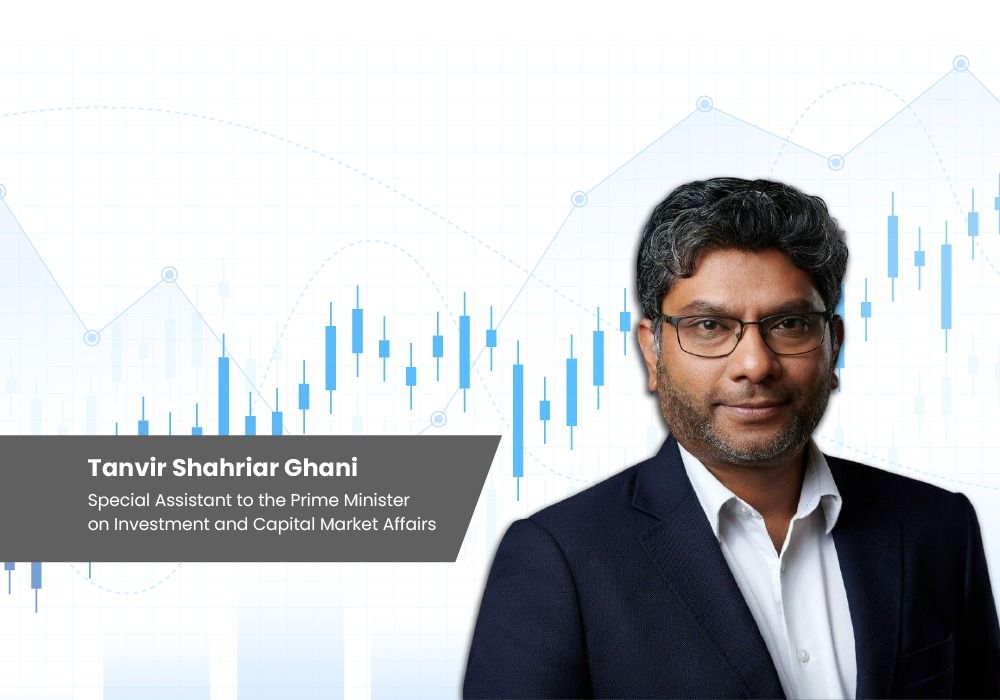
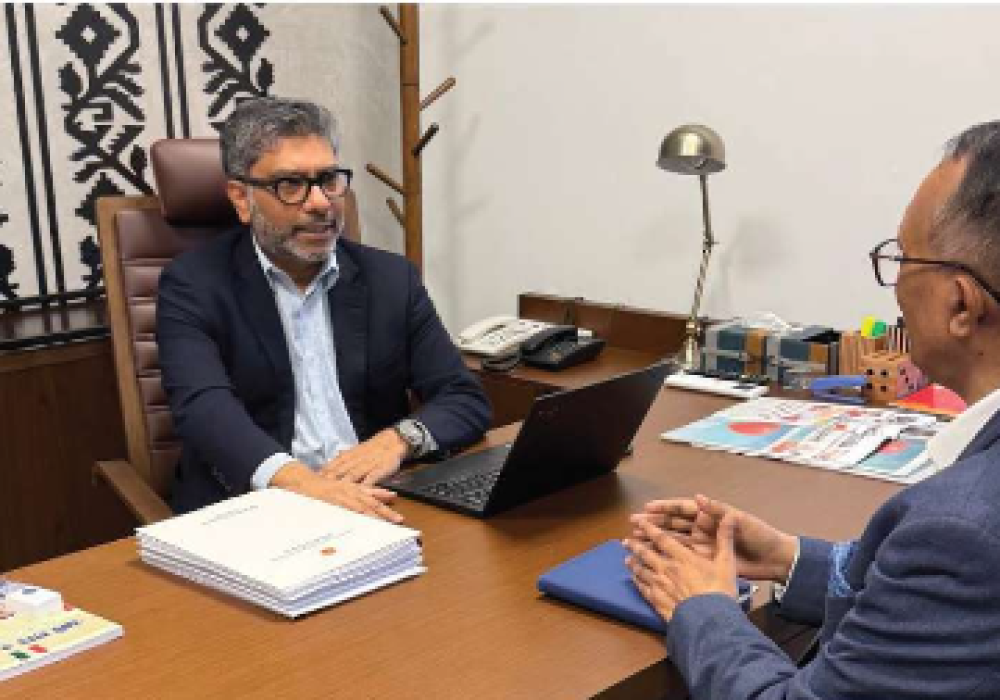
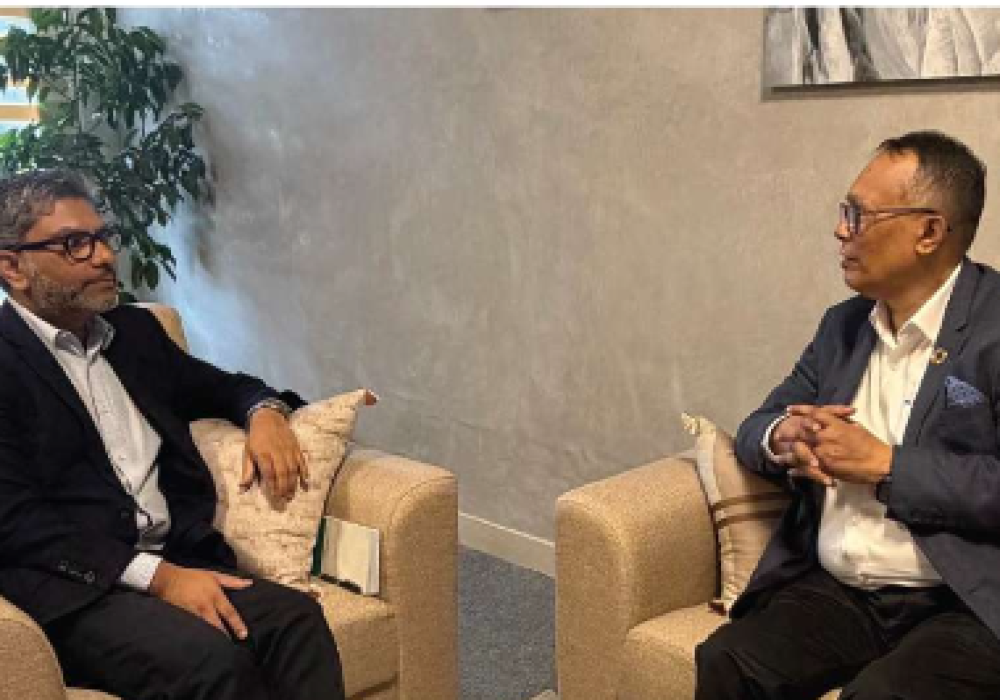
Bangladesh's capital market is undergoing a decisive transformation, and at the center of this effort is Mr. Tanvir Ghani, Special Assistant to the Prime Minister for Investment and Capital Market Affairs. In this exclusive interview for the Foreign Investors' Chamber of Commerce and Industry's special publication, he outlines how governance reforms, enhanced transparency, and market modernization are reshaping the investment landscape. From depoliticizing regulatory institutions and strengthening disclosure standards to diversifying financial products and building digital infrastructure, Ghani emphasizes that the reform agenda is not about incremental change but about laying the institutional foundation for a globally competitive market. His vision is clear: to position Bangladesh as a regional powerhouse where investor confidence is rebuilt through enforcement, innovation thrives under strong oversight, and foreign participation finds new opportunities in a deeper, more predictable capital market.
Q1. Reform Agenda: What do you see as the most transformative elements of Bangladesh's ongoing capital market reforms, particularly in governance, transparency, and modernization?
The most consequential change is institutional, not incremental. We have moved political appointments out of the regulatory chain: the Bangladesh Securities and Exchange Commission has been fully reconstituted with a professional leadership team and that principle now extends across the financial sector. Governance reform of this kind is slow to notice and difficult to reverse, which is precisely why it matters more than any single policy measure.
On transparency, the reforms are aimed squarely at what foreign institutional investors actually diligence: audit quality, balance sheet integrity, and corporate disclosure standards benchmarked against international norms. No amount of market-development messaging substitutes for investors trusting the numbers they are reading.
On modernization, we are diversifying the market's product base - corporate bonds, mutual funds, green bonds, and Sukuk - while building the digital infrastructure, including financial cloud technology, to support them. A capital market that offers only equities cannot carry the financing load an economy of this size requires.
The gap is real and worth naming plainly: the market remains overwhelmingly equity-heavy, with only a handful of corporate bonds listed on the exchange today. That is precisely why the bond, Sukuk, and green-finance work is a structural priority rather than a line item.
Q2. Investor Confidence: Which measures - such as settlement system upgrades, streamlined repatriation procedures, and technology-driven market surveillance - will most effectively rebuild investor confidence?
Confidence returns through enforcement as much as infrastructure. The reconstituted BSEC has taken visible action against past market manipulation, and that record matters to institutional investors who have seen reform announcements before without follow-through.
On infrastructure, our priority is self-regulation aligned with global market standards, together with enhanced risk management and market surveillance technology that lets the regulator monitor markets in real time rather than retrospectively. We are also studying best practice from established markets, including London, on structuring self-regulatory functions among intermediaries.
On settlement, we are working towards a T+1 cycle, which is now the direction of travel in the markets we benchmark against and a meaningful reduction in the counterparty and funding risk foreign investors carry between trade and settlement. This is being phased in coordination with Bangladesh Bank and the Central Depository, not implemented by the regulator alone.
On repatriation specifically, the honest answer is that this is the layer foreign portfolio investors ask about first. We are moving towards stronger, mechanised repatriation rules - procedures that operate on defined, predictable timelines rather than case-by-case discretion - in step with Bangladesh Bank, because liquidity and ease of entry and exit are what convert interest into allocated capital.
Q3. Foreign Participation: How is the Government creating a more predictable and investor-friendly capital market environment, and what new opportunities do you see emerging for foreign investors?
Predictability comes from coordination across the agencies a foreign investor actually deals with - Bangladesh Bank, BIDA, the NBR, and BSEC - rather than from any one reform in isolation. The Cabinet's approval of the FDI Incentive Scheme Policy is a concrete step in that direction, and we have already engaged international development institutions and a number of foreign banks and fund managers who have expressed interest in Bangladesh.
In my conversations with foreign investors, three things come up consistently (as expected): liquidity, depth of market and the ability to trust and benchmark our data against regional peers using international standards.
Everything we are doing on disclosure and surveillance is in service of those three points.
If I could perform magic - that's what I would do. Solve for liquidity, institutional depth and comparative tools across the region. The rest would just happen as a function of the above.
On new opportunities, the mandate goes beyond the traditional sectors. We are actively positioning technology, fintech, biotech, and infrastructure alongside conventional listings, recognizing that an economy overly dependent on bank financing is not a modern one, and that broader, deeper capital markets are the more sustainable route to long-term financing.
Part of the motivation is that market capitalisation today is still concentrated in a relatively small number of names. New listings in technology, infrastructure, and fintech are how that concentration eases over time, rather than through any single reform.
Q4. Institutional Coordination: How is the Prime Minister's Office coordinating with BSEC, Bangladesh Bank, and DSE to ensure reforms are aligned and implemented effectively?
My role exists specifically to synchronize capital market development with national economic policy, which means regular, direct engagement with BSEC leadership on reform sequencing, alongside the Financial Institutions Division and Bangladesh Bank on the monetary and macro-financial side. This is not an advisory relationship at arm's length; it is a standing coordination function.
We are also instituting regular (monthly) meetings with the relevant regulators in one room - Bangladesh Bank, BSEC, NBR and IDRA. So much of what happens in the markets and in the economy touch more than one key regulator. Important that we understand the impact of our rules and changes on the other.
At a higher level, an integrated strategy covering monetary policy, fiscal policy, exchange rate management, and the medium-term macroeconomic framework has been approved at the highest level of government, so capital market reform is not proceeding independently of the wider stabilisation agenda. That alignment is also reflected in our ongoing engagement with the IMF, which has recognized the phased, sequenced nature of the reform programme.
Q5. Regulation vs. Innovation: How can Bangladesh strike the right balance between strong regulatory oversight and fostering innovation and dynamism in the capital market?
The two are not in tension if the sequencing is right. Strong oversight - depoliticized regulators, real enforcement against manipulation, credible disclosure - is what earns the market the trust required for innovation to be adopted rather than viewed with suspicion. We have been direct in saying there will be no tolerance for market manipulation, and that principle applies regardless of the sponsor involved.
Within that framework, our direction of travel is toward self-regulation, consistent with standard practice in global capital markets: building trust among intermediaries, issuers, and mutual funds so that the regulator's role shifts progressively from direct control toward supervision of a self-governing market. That is a multi-year transition, implemented in phases, not a single reform.
Q6. Future Vision: What is your long-term vision for Bangladesh's capital market, and how can the current reform agenda help position it as a globally competitive market capable of attracting greater domestic and foreign investment?
The ambition is specific and measurable, not aspirational language for its own sake. Today the market has roughly 360 listed companies and institutional ownership still near 20 percent. Our three-year benchmark is a substantially deeper market - on the order of 600 listings - and a decisive lift in institutional ownership toward the levels seen in more mature regional markets. That is a composition shift, not an index target.
I have described this goal as a regional powerhouse, and I use that phrase deliberately: it is mathematically feasible given the underlying economy, provided the reform sequencing on governance, disclosure, and market infrastructure continues without interruption. Bangladesh's task now is the same one several regional peers have already completed - building the institutional foundation first, so that the re-rating of the market by investors and by international agencies follows as a consequence, rather than being asked for in advance.
Positioned that way, the current reform agenda is not a defensive response to past weakness. It is the foundation for Bangladesh's transition from a market of potential to a market of global trust, and for the country's broader ambition of becoming, in the fullest sense, a breakout nation.